

SumZero Energy Systems
Emergency only: (508) 965-0046
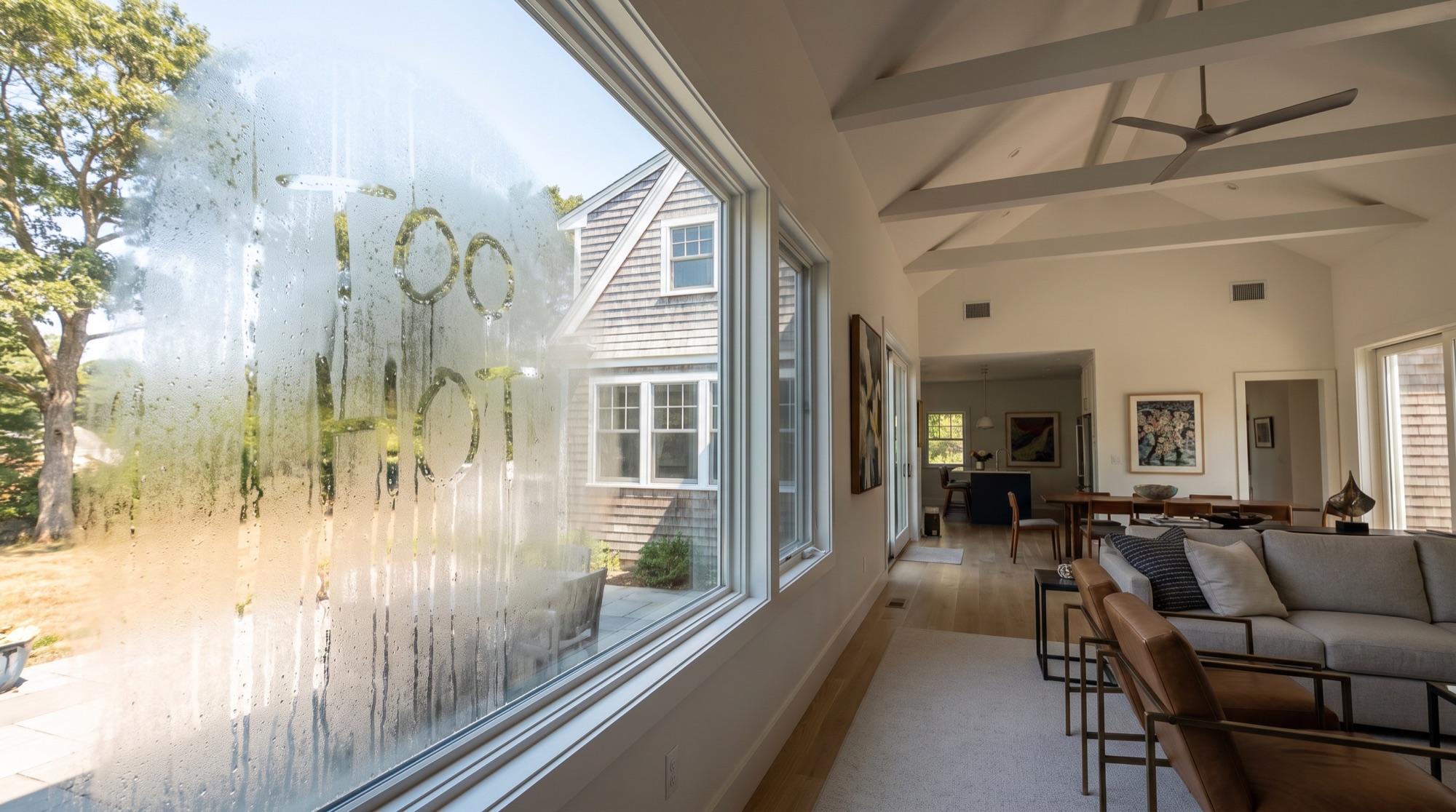
Living room window fogged with condensation with Too Hot written on the glass
Heatwave Comfort Guide

Experiencing High Temp and Humidity?

Your home feels sticky and your system seems like it cannot keep up. Here is what is happening, why it is normal, and what you can do right now. Please read below.

Loading location... Live Data
Outside Now --°F
Feels Like --°F
Humidity --%
Updated just now

Your system is working. It was designed for our region, not for the two or three most extreme days of the year.

Systems are sized to a design temperature that covers about 95% of the time in our area. A heat wave pushes conditions past that point. When your system is running nonstop and sitting a few degrees above your set point, it is doing its job exactly as designed. It is working at full effort.

The stickiness you feel is humidity, not temperature. Removing moisture takes far more energy than dropping degrees. When the air outside is heavily loaded with moisture, your system spends most of its energy trying to wring that water out of your indoor air.

Why your windows are sweating

Foggy or dripping windows during a heat wave are a moisture story, not a leak. Warm humid air condenses on any cooler surface. You will see this on window glass, cold pipes, and air vents. It is basic science at work.
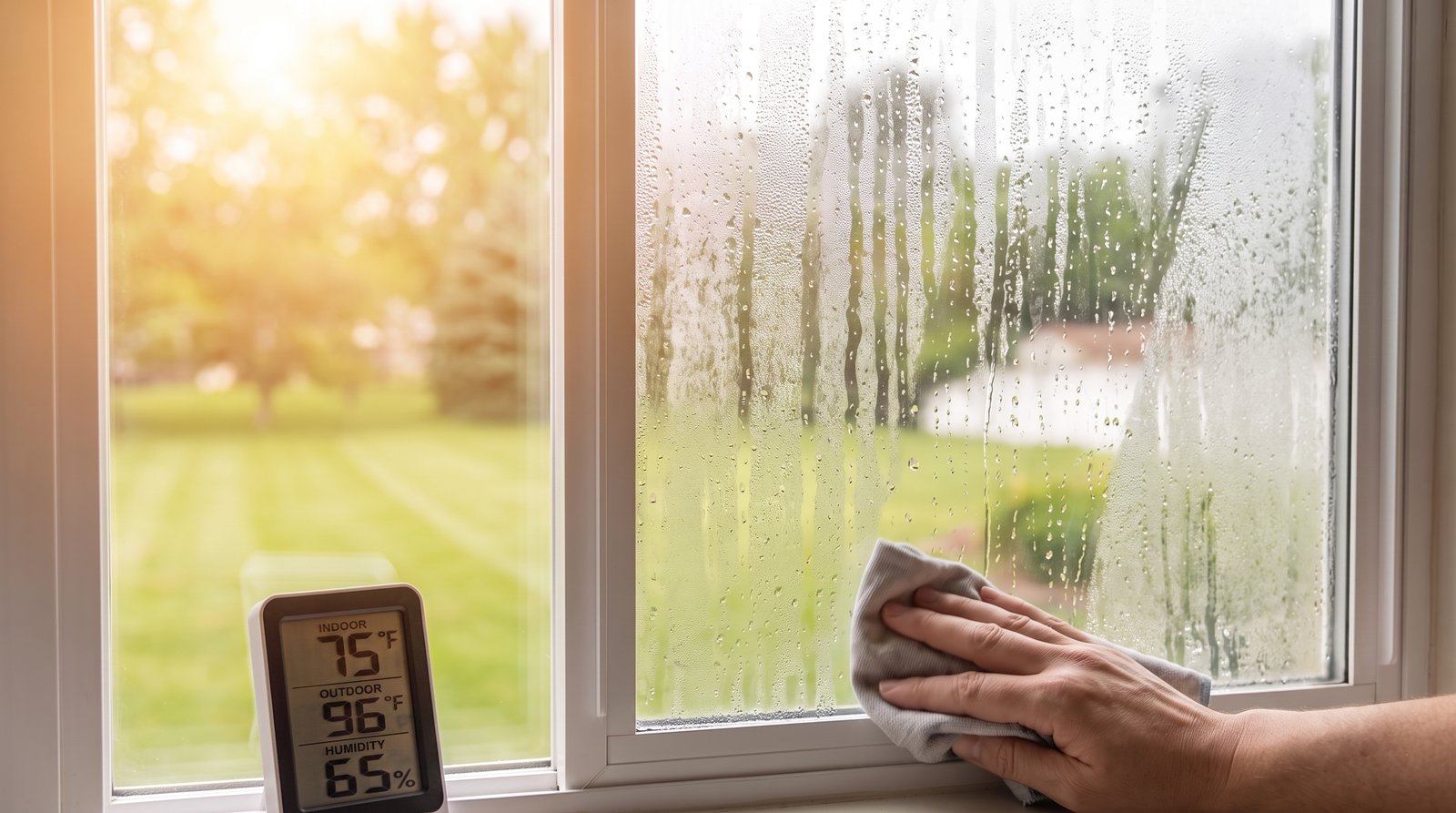
Indoor thermometer showing 75 degrees indoors, 96 degrees outdoors and 65 percent humidity in front of a window covered in condensation, with a hand wiping the fogged glass

The Dew Point Reality

At 75°F indoors, condensation starts forming on surfaces when relative humidity reaches around 65%. Keeping your indoor humidity between 40 and 60% keeps glass and vents dry. Sweating windows are a signal about indoor moisture levels, not property damage.

Quick tips you can do right now

Ten small moves that add up to real comfort during the wave.

Set it and leave it around 74 to 75°F.

Chasing 68° during a heat wave makes the house clammier, not cooler, and it will not get there faster.

01

Let it run long and steady.

Long run times are how the system wrings moisture out of the air. Short bursts cool the thermostat but leave the house damp.

02

Keep windows and doors shut.

Every open window pulls in hot, wet outdoor air that you then pay to remove.

03

Close blinds and curtains on the sunny side.

Block the sun during the day and you block the heat before it gets in.

04

Run ceiling fans in rooms you are using.

Moving air feels 3 to 4 degrees cooler on your skin. Turn them off in empty rooms, fans cool people, not spaces.

05

Change or clean your filter.

A dirty filter chokes airflow and cripples the system's ability to dehumidify.

06

Run a dehumidifier.

In the basement or any stubborn room if you have one. Aim for 40% to 60% indoor humidity.

07

Use bath and kitchen exhaust fans.

While showering or cooking, then shut them off so you are not pulling in more outdoor air.

08

Skip the heat and moisture makers midday.

Ovens, dryers, and long hot showers add real load. Save them for evening.

09

Give it time.

On the hottest afternoons the system may hold a few degrees above your set point. It catches up as the sun drops.

10

Questions and answers

Is my system broken?
Almost certainly not. During a heat wave the number one reason systems seem to “underperform” is simply that outdoor conditions have pushed past what any residential system is sized to handle. If it is still blowing cold air and running, it is working. See below for the short list of signs that warrant a real service call.
Why won't it reach the temperature I set?
Your system was sized to a regional design temperature that keeps you comfortable about 95% of the time. A heat wave is the other 5%. When it is 95°F and humid outside, holding your home in the low-to-mid 70s is a big lift, and the last few degrees may not come until the outdoor temperature drops in the evening. This is normal and expected behavior, not a defect.
Why does my house feel sticky even though the thermostat says 72°?
Because comfort is about humidity as much as temperature. The thermostat measures degrees, not moisture. On muggy days the air inside can still be holding a lot of water, which feels heavy and sticky even at a “correct” temperature. Longer run times and lower indoor humidity fix the feel.
Should I crank the thermostat way down to cool the house faster?
No. Setting it to 65° does not cool any faster, it just runs the system harder toward a target it may not reach, and it can leave the house clammy. Set it around 74 to 75°F and let it run steadily. That actually removes more moisture and feels better.
My system runs constantly during the heat wave. Is that bad?
No, that is exactly what you want on the hottest days. Long, steady run times pull the most moisture out of the air. What you do not want is a system rapidly turning on and off, which cools the air but leaves it damp and adds wear.
Why is my upstairs hotter and stickier than downstairs?
Warm, moist air rises. This is called the stack effect, and it makes second floors run several degrees warmer and more humid, especially in the afternoon. Running the upstairs system steadily, closing blinds, and using ceiling fans all help. It is a physics issue in almost every home, not a fault in your equipment.
Do I need a bigger system?
Usually the opposite. A system sized too big cools the air quickly then shuts off before it can remove humidity, which leaves the house cold and clammy and short-cycles the equipment. Your system was sized on purpose for steady comfort and good dehumidification across the whole season, not just the three hottest days.
Should I get a dehumidifier?
If certain rooms or the basement stay damp, a dehumidifier is a great helper. Target 40% to 60% relative humidity. It takes moisture load off your system so the air conditioning does not have to work as hard. Ask us and we can recommend the right size or a whole-home option.
Will running it this hard spike my electric bill?
Heat waves do cost more to cool through, there is no way around the physics. But steady run times at a reasonable set point actually use less energy than a system short-cycling toward an unrealistic target. Chasing 65° all afternoon costs more and delivers less comfort.
My vents or pipes are sweating and there's a little water. Should I worry?
A little condensation on vents, windows, or cold pipes during extreme humidity is normal and clears as indoor humidity drops. Steady, active water dripping from the indoor unit or a ceiling stain is different and worth a call, see the list below.
How long will this last?
Until the heat wave breaks. As outdoor temperature and dew point come down, usually overnight and after the front passes, your system catches back up and the stickiness clears. Keep your set point steady rather than fighting it hour to hour.
I've done everything here and it's still miserable. What now?
First, give the tips a full day to work, comfort lags the changes you make. If a room is genuinely unusable, a portable dehumidifier and a ceiling fan buy real relief fast. And if you see any of the true warning signs below, reach out and we will get to you as soon as we can.